
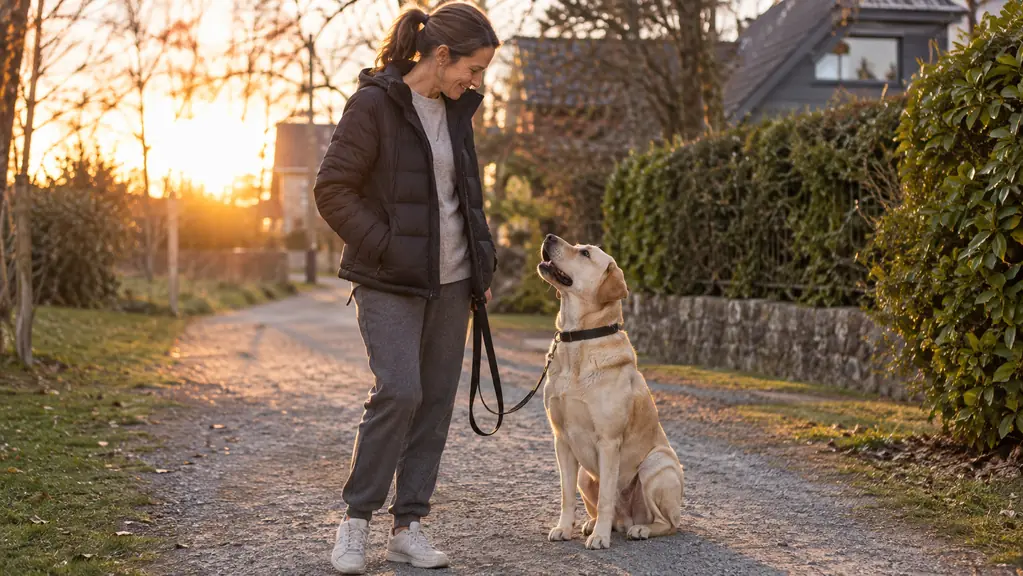
Two years ago I was walking Biscuit, my blue-nose pit bull, on the gravel path behind our house when a cat came out from between two parked cars. She went left. I went right. I did not fall down, but I stood there a while afterward with my heart going and my shoulder sore. Biscuit is 58 pounds, which is not a large pit bull. She is just strong, and she leans into a leash like the walk is a job she was hired to do. That afternoon I sat at the kitchen table and ordered the rabbitgoo Dog Harness with the two leash clips.
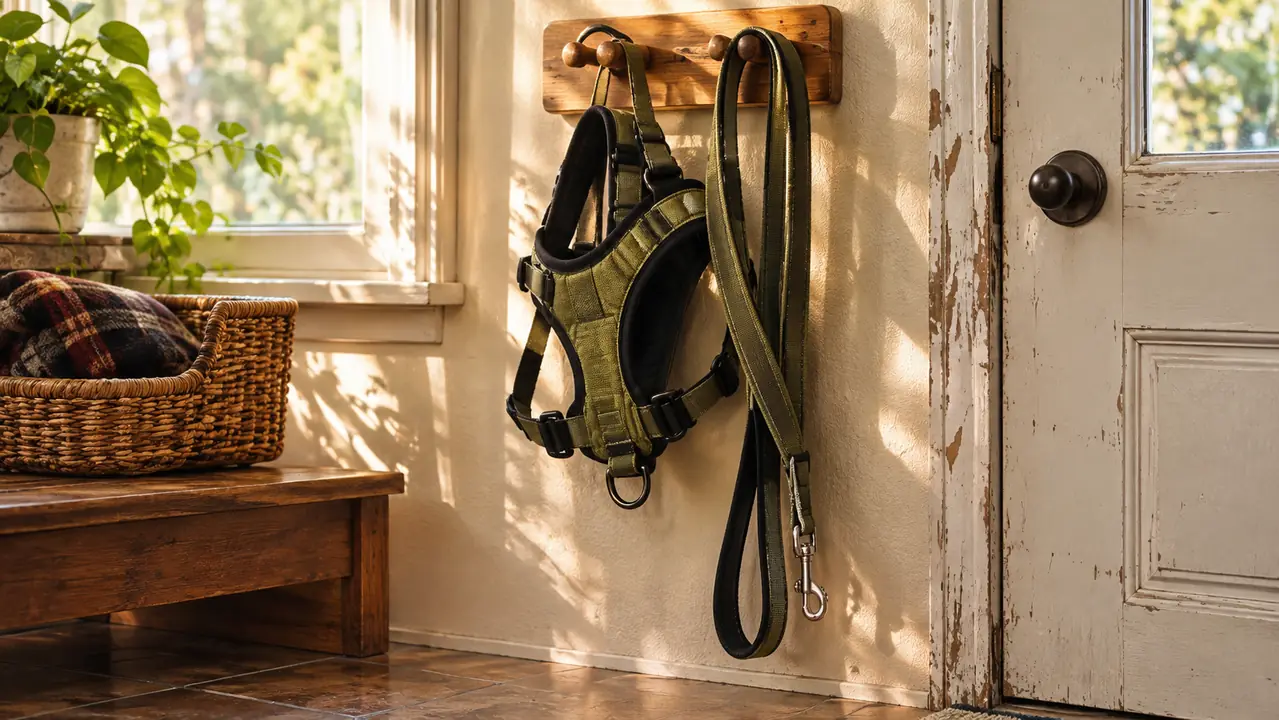
I have used it almost every morning since. It hangs on a hook by the back door next to the leash. I have rinsed it, readjusted it more times than I can count, and made most of the mistakes a person can make with a harness. This is the honest version of that. The rabbitgoo harness made my walks better. It did not make them the way I pictured when I clicked buy, and there are three things I wish the listing had said out loud.
The Quick Verdict
A solid steering tool for a strong dog and a grandmother's shoulder. It cut the hard yanking by roughly half and never once choked her. It did not teach her leash manners, and the fit took me three tries to get right.
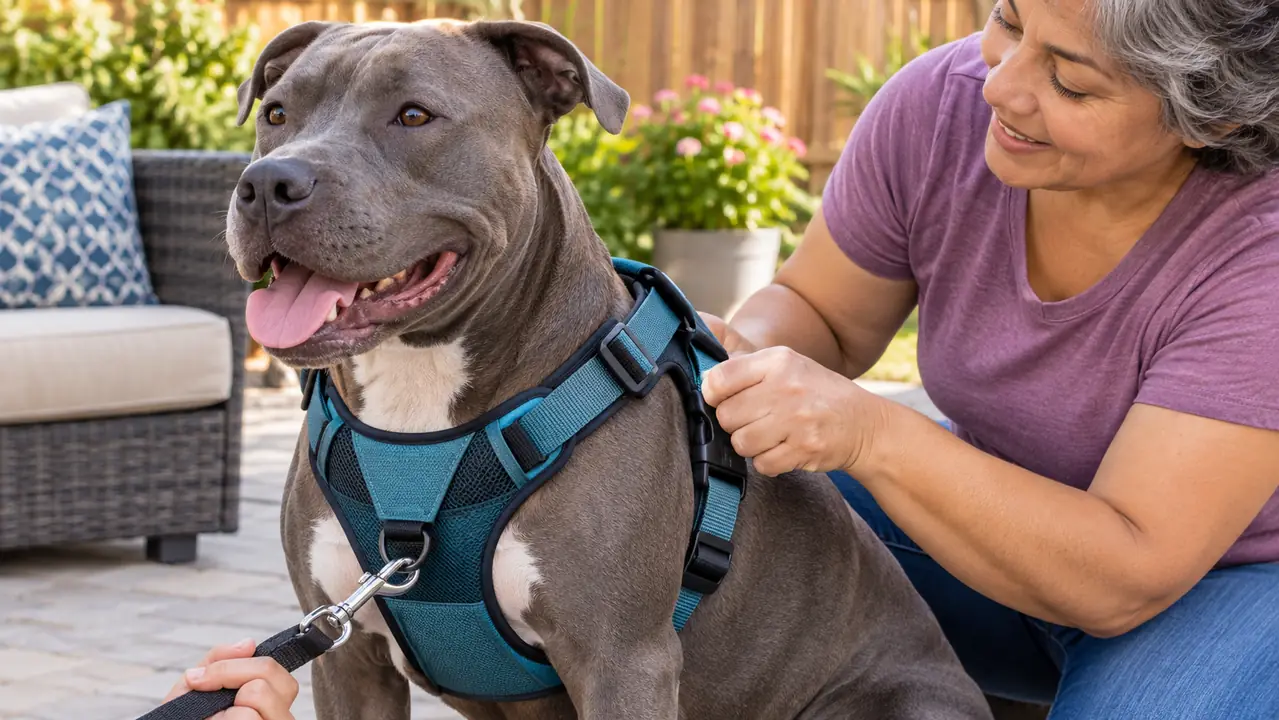
Amazon Check Today's Price →Two metal leash loops and four straps, the setup that finally let me walk Biscuit with one hand
I use the front loop for our morning loop and the back loop for the car and slow strolls. It weighs 8.64 ounces on a 58 pound dog, so she forgets it is on. Current price and sizing are on the listing.
Amazon Check Today's Price on Amazon →How I've Actually Used It for Two Years
Our routine is boring, which is the point. Morning walk around the neighborhood, about a mile, leash on the front clip. Afternoon stroll, leash on the back clip. Car rides to the vet, also back clip, and that is only so she cannot climb over the seat into my lap while I am driving the RAV4. Same harness both times. I have never owned another one, and I have no plans to go shopping.
Before this harness I had a flat collar and a six foot leash, and for four years that was the whole of my equipment. I want to be honest about how badly that worked, because the harness only makes sense against what came before it. Biscuit would hit the end of that leash and the collar would take her whole 58 pounds across the front of her throat. She would cough. I would stop. She would cough again and lean harder. I tried holding the leash short with both hands, which made my wrists ache by the second block. I tried the trick where you stop dead and refuse to move until the dog settles, and I did that for a solid month, and it worked about as well as standing still in front of a train works. I tried turning and walking the other way, which turned our mile loop into a hundred yards of turning around in a cul-de-sac. What I did not have was leverage. That is the word I would use if I had to explain it to another grandmother at the dog park. You do not need your dog to be less interested in the world. You need a way to redirect 58 pounds without your shoulder paying the bill. That is why I went looking at all, and why I ended up reading rabbitgoo reviews at eleven o'clock at night with my reading glasses on.
The first two weeks deserve a precise description, because 'it worked' is not a review. What changed is not that she stopped pulling. She stopped being able to pull me. Before the harness, a hard surge from Biscuit meant I braced with my whole body and hoped. After about ten days, a surge meant the strap across her chest turned her shoulder and she came around to face me. Annoying for her. Fine by me. My shoulder stopped aching on the drive home.
There is one morning I remember better than the rest. It was a Tuesday in October, a little after seven, still dark enough that the streetlights were on. We were coming up the sidewalk on the east side of the street when a mail truck pulled away from the curb about thirty feet ahead. Two years ago that would have been the end of the walk. Biscuit would have gone up on her back legs and I would have hung on with both hands and then walked home with a sore arm and a bad mood. What happened instead was that she surged, the front clip took her, and she came back around to face me with all four feet on the ground. It was not graceful. She was not happy about it. But the leash was slack again in about four seconds and we kept walking. I am not going to pretend I did not tell my daughter about that on the phone that night.
What Nobody Tells You About the Two Clips
The front loop does the work. That is where the steering lives. When Biscuit hits the end of the leash on the front loop, the pull rotates her toward me instead of dragging me down the block. The back loop is for the car and for the last stretch home when we are both tired and I am not asking for manners. If you buy this harness and clip to the back loop for your everyday walk, you have bought a vest with a ring on it.
Here is how I found out. The first week I owned it, I clipped the leash to the loop on her back, because it sat up on top where I could see it and it seemed like the obvious place for a leash to go. Our walks that week were exactly as bad as they had always been. She pulled, I braced, my shoulder ached. I remember standing in my own kitchen on the sixth or seventh morning, genuinely annoyed, thinking I had wasted money on a vest. Then I read the instruction sheet that came in the box, which I should have read on day one, and moved the clip down to the chest. The difference was not subtle. It was the difference between steering a car and pushing one.
The second thing nobody says is that switching loops takes two hands and a calm moment. The metal clip is stiff, the rings are not generous, and a dog who is already bouncing at the sight of the leash does not help. I do it in the hallway before we go out the door, never on the sidewalk. That sounds like a small thing. It is a small thing, but it is the kind of small thing that decides whether you actually use the front clip or quietly stop bothering by March.
The hardware is the part I have mixed feelings about. It has held up, which is the main thing. Two years of a strong dog hitting the end of a leash and neither metal hook loop has opened or bent. The buckle still closes with a solid click, and the straps still hold their settings once I take them up, which is more than I can say for the cheap adjustable things I have owned in my life. What I do not love is how tight the openings are. Getting a leash clip onto the chest loop takes a moment of aiming, and in cold weather with gloves on it takes longer than a moment. That is a small complaint. It is also the reason I attach the leash in the hallway and not on the front step with a dog bouncing at my knee.
The third is the gait. Some dogs learn to walk a little sideways on a front clip harness, with one shoulder pushed inward. Biscuit did that for the first few weeks and mostly stopped once she understood that pulling forward got her nowhere. She still crabs a bit when she is determined. If your dog has a shoulder or neck issue, ask your vet whether a front clip is a sensible idea before you commit to one.
The Fit Is Not Set and Forget
Four straps. Two at the neck, two across the body, all of them adjustable, and every one of them matters. My first attempt was wrong in the way most first attempts are wrong: I left the neck loose because it looked comfortable. Biscuit backed straight out of the harness in the driveway in about four seconds and stood there looking at me like I had done it on purpose. Nothing bad happened. I took up the neck strap, took up the belly strap, and we tried again.
The measurement that matters is the chest, taken around the widest part behind the front legs, not the neck. The listing gives that range in inches. Measure twice with the dog standing, because a dog sitting down measures smaller and a dog who just ate measures bigger. The straps carry plenty of slack in both directions, so there is room to take up or let out as the seasons change.
The second fit was too tight, which I only figured out from how she moved. She walked stiff through the shoulders and kept stopping to sit, which is not a thing Biscuit does on a walk. I had taken the chest straps in because the driveway escape had scared me into overcorrecting. So I let the belly strap back out one notch at a time over about four evenings, walking her up and down our own block after each change, until she was moving loose again and I could still slide two flat fingers under the strap at her chest. That is the test I use now. Two fingers, flat, no pinching and no slack. The third fit is the one that has held for the better part of two years, with small adjustments in spring and fall. I am not a patient person about this kind of thing, so I will say it plainly: the harness did not come out of the box fitting my dog, and I do not believe it comes out of the box fitting anybody's dog.
Check it once a month. Biscuit slimmed down a little one summer and I had to take up the belly strap two notches. If I had not noticed, she could have backed out of it on a busy street instead of in our own driveway. That is not a knock on the harness. That is what adjustable straps are for, and adjusting them is my job, not the manufacturer's.
The Fabric, the Mud, and Two Years of Washings
The body is polyester with mesh panels, and the mesh is the part that matters in Albuquerque in July. Biscuit runs hot. A heavy harness in summer turns into a dog who lies on the tile and refuses to move. This one has not done that. It weighs 8.64 ounces, and on a 58 pound dog that is close to nothing. She does not walk stiff-legged in it, which is more than I can say for the flat collar days when she coughed at the end of the leash.
Our backyard is dust and gravel most of the year, and for about a week each spring the irrigation turns it to soup. Biscuit likes to come in from the garden with her chest low and her nose down, and the mesh on this harness collects all of it. The first year I was fussy about every smudge. Now I have a routine. Saturday morning, if the harness looks gray, I take it off the hook, rinse it under the tub faucet, rub the mesh panels between my hands with a drop of dish soap, and hang it over the shower rod. It is dry in a couple of hours in our air, and in winter I hang it in the laundry room instead, where the furnace keeps it warm. It has not faded, it has not stretched out of shape, and it has not started to hold an odor, which the collar it replaced absolutely did by the end of every summer.
After two years the stitching is intact, there is some pilling on one mesh panel, and nothing has torn. The reflective strips still catch headlights on our early winter walks, though they are dimmer than they were the first year. I am out before sunrise half the year, so I notice. Nothing on this harness has needed a repair, and I have never had to put it away wet and hoped for the best.
What I Liked
- Two metal leash loops, so the front clip steers on walks and the back clip handles the car and easy strolls
- Four adjustable straps that actually hold the setting once you take the time to get them right
- Mesh panels that do not overheat a hot-natured dog in a New Mexico summer
- Reflective strips that still catch headlights after two years of washes
- It reduced the hard yanking without a choke chain anywhere near my dog's throat
- 8.64 ounces on a 58 pound dog, light enough that she forgets it is on
Where It Falls Short
- Switching the leash between loops takes two hands and a dog who is not spinning
- Your first fit will probably be wrong. Mine was, and Biscuit slipped out of it once in the driveway
- The mesh collects dust and needs a rinse every few weeks
- The reflective strips work but are dimmer in year two than in year one
- On a day when she is already worked up, she can still pull. Less, not zero
- It is a steering tool, so it will never teach a dog to walk politely on its own
The front clip did not stop Biscuit from pulling. It stopped her from being able to pull me, and around here that is the whole argument.
What It Did Not Fix
A no pull harness is a steering wheel, not driver's education. Biscuit still needs me to stop walking when she surges, stand still, and wait her out. She still loses her mind at the mail truck. She still wants to meet every dog on the block and does not accept that this is not always welcome. None of that changed because the hardware on her chest changed.
The name on the box sets an expectation the product cannot meet, and I want to say that plainly because it is the fairest criticism I have. No harness on earth teaches a dog to walk politely. It reduces the force a dog can put into the leash and gives you a way to redirect. If you are expecting the pulling to end, you will be disappointed around week three and you will blame the harness for it.
There is a specific limit worth naming. On a normal morning we pass two or three other dogs being walked on the same route, and Biscuit wants to meet all of them. On the front clip I can hold her at the far side of the sidewalk with one hand and keep moving. If the other dog is also lunging, and the owner has a long flexi lead and no interest in cooperating, things get loud and I cross the street. The harness gives me control of my own dog. It gives me nothing at all over anybody else's. That sounds obvious. It took me about a year to stop being annoyed about it.
It also does nothing about prey drive. It is not a muzzle and it is not a restraint for the car in any real safety sense. I use the back loop in the RAV4 so she stays out of the front seat, and that is the entire extent of it. If you want a crash tested car restraint, that is a different product and a different conversation with somebody who knows more than I do.
Who This Is For
This is for the person with a strong medium or large dog who has been white knuckling a flat collar for years and has the shoulder to prove it. It is for someone who walks in the dark, because the reflective strips are real and they do their job. It is for a household where the dog is not left alone wearing it, and where somebody is willing to spend ten quiet minutes in the hallway getting four straps right before the first real walk.
It also suits a dog who tolerates a vest going on and coming off without any drama. Biscuit could not care less. She stands at the door and waits, because harness means walk and walk means the good part of the day.
Who Should Skip It
If your dog panics at having straps put on, or backs away and shuts down, this is not the place to start. A harness that frightens a dog is worse than a collar, and the answer is a qualified trainer and a slow plan, not a different brand. Ask your vet for a referral if that is your dog. I am a grandmother with one pit bull, not an expert.
Skip it too if you want to clip on and be done. This needs a monthly strap check and a rinse every few weeks, and it needs you to actually use the front loop instead of the one that is easier to reach. And skip it if what you really want is a car safety seat or a way to tie a dog up outside a store. It is a walking harness. That is the whole of what it is.
If your shoulder has had enough, this is the loop that changes the walk
Two years in, the straps still hold, the stitching is intact, and Biscuit still goes out on the front clip every morning. Measure the chest, check the size range on the listing, and give yourself a week to get the fit right.
Amazon See the rabbitgoo Harness on Amazon →