
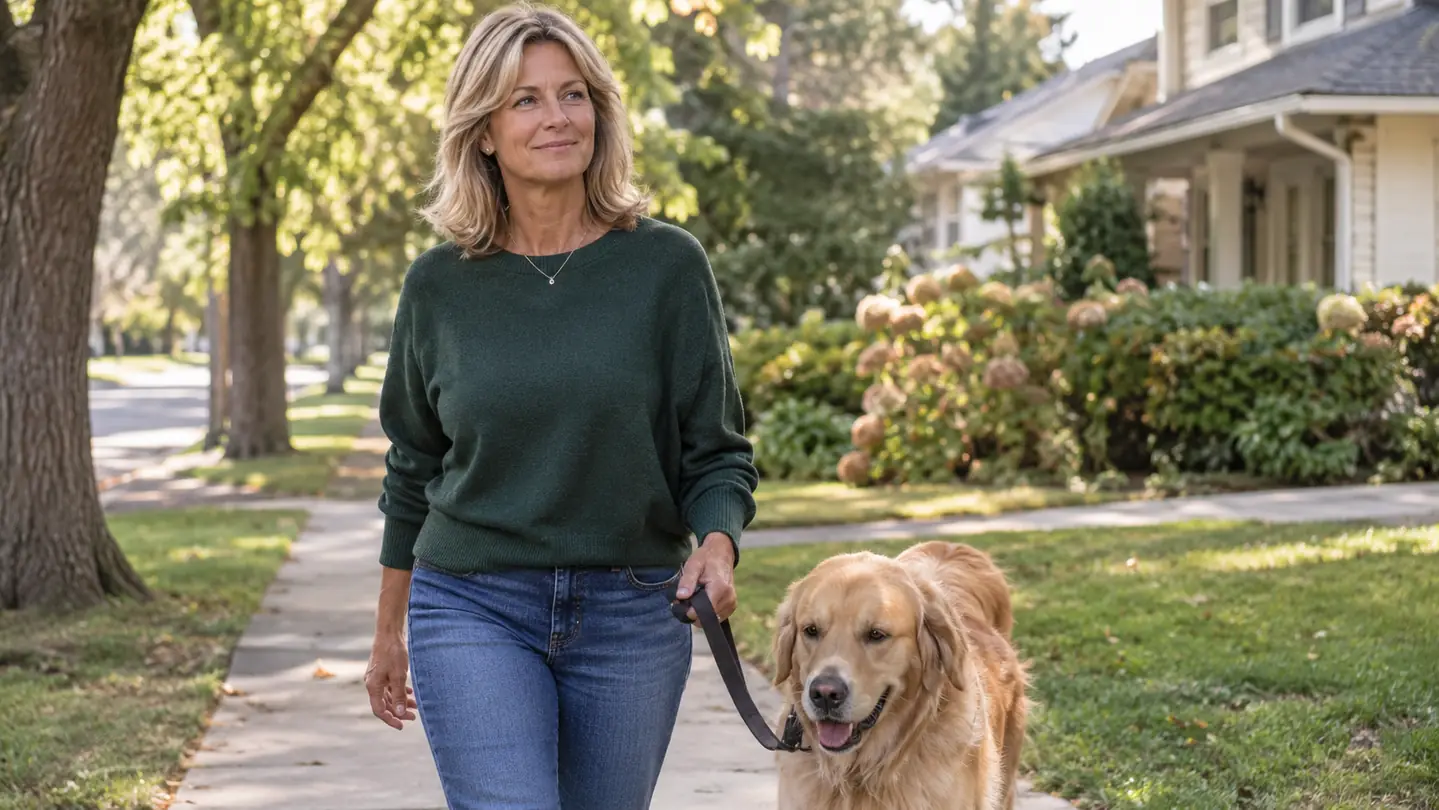
The gravel path behind our house in Albuquerque is where I learned that a flat collar was not enough. Biscuit is my 6-year-old blue-nose pit bull, 58 pounds of muscle and stubbornness, and one morning two years ago she saw a cat and hit the end of the leash. I went one way. She went the other. I did not fall, but I came close enough that my hip hurt for a week and my pride hurt longer.
Before that morning, our gear was simple. A flat collar and a six foot leash. That was it. I had never used a harness on any dog, and I figured a collar was what people used. Biscuit is strong, though, and strong dogs do not care about your plans. A friend at the dog park told me to look at a rabbitgoo harness. She had one on a Lab mix and said it gave her more control without cranking on the dog's neck.
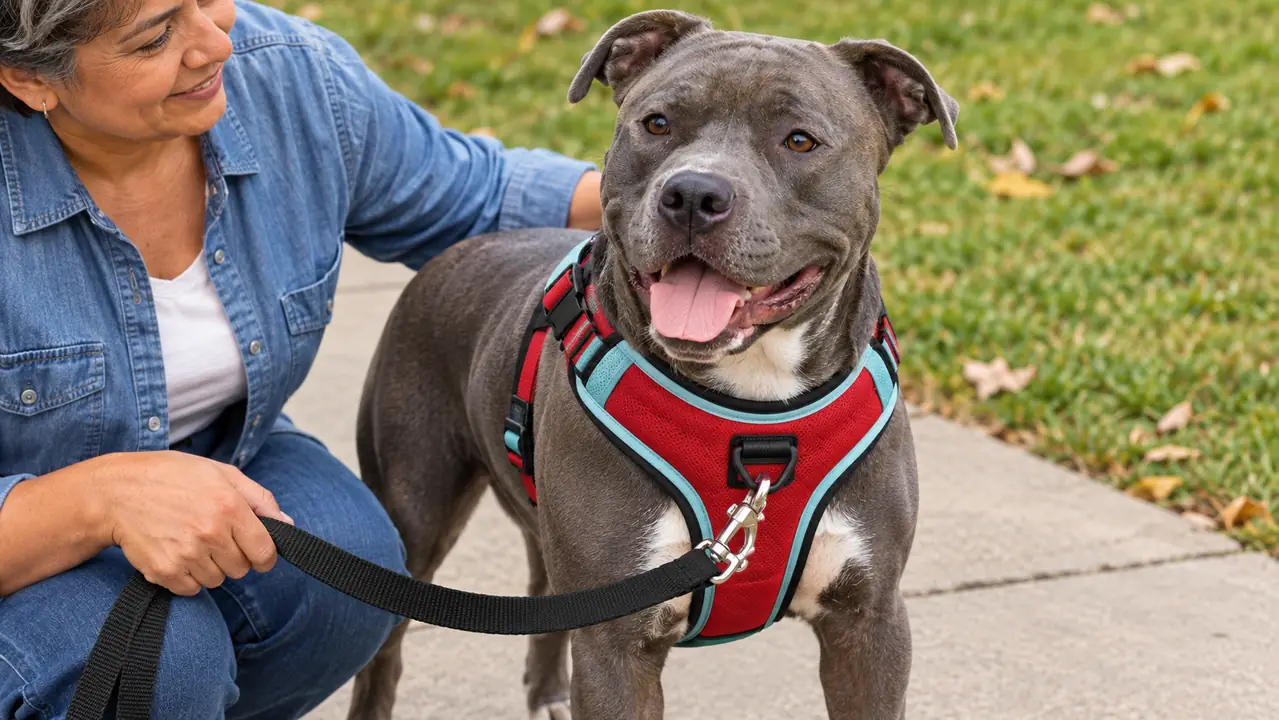
I bought the rabbitgoo harness two years ago. It hangs on a hook by the back door now, and it is the only harness I use. The first week was an adjustment for both of us. Biscuit walked a little sideways, like she was wearing a coat that did not fit. By the second week, she stopped noticing it. That was also when I noticed the pulling had eased. Not gone. Eased. There is a difference, and I will not pretend otherwise.
What I like is that the leash can attach at two places. There are two metal hook loops, one on the chest and one across the back. For our morning walk around the neighborhood, I use the front loop. When Biscuit pulls, the front attachment turns her slightly toward me instead of letting her lean all her weight forward. It is not magic. She still pulls when she sees another dog. But I can hold her with one hand now, and I could not do that before.
The back loop gets used for easier trips. Loading her into the RAV4, walking across the parking lot at the vet, a slow stroll when my knees are acting up. The back loop lets her walk ahead a little, which she likes. The straps adjust in four places, and I had it fitting her 58 pound frame in a few minutes. The buckle is sturdy and easy to work with one hand, which matters when she is wiggling.
The harness did not turn Biscuit into a different dog. It gave me a way to hold the dog I already had.
The front clip is the part that changed our mornings
Two metal hook loops, four adjustable straps, and a fit that stays put on a 58 pound puller. That is what made the difference for us.
Amazon See the rabbitgoo Harness on Amazon →Our walks are not perfect. I want to be plain about that. Biscuit is a pit bull with a high prey drive, and if a squirrel cuts across the sidewalk, she will lunge. The harness gives me a fighting chance, not a guarantee. I also still carry treats and I still stop and ask her to sit when I see another dog coming. The harness is a tool. It did not train her for me.
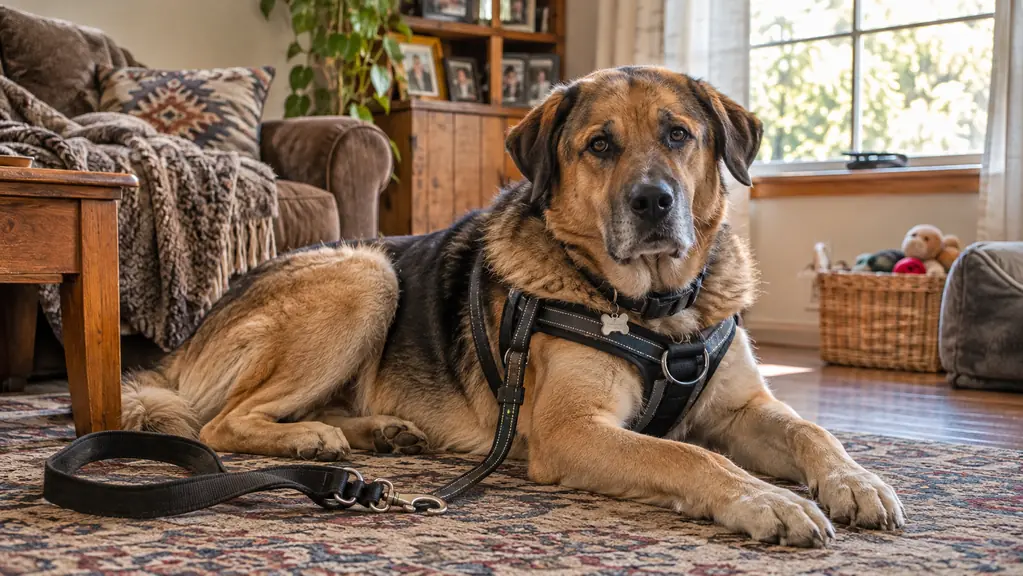
The reflective strips are a small thing that turned out to matter. In winter I walk before the sun is up, and drivers on our street are not always awake. The strips catch headlights. I did not buy the harness for that, but I am glad it is there. The fabric has held up for two years of daily walks and one wash with a hose. The mesh panels keep her from getting too hot in the summer, or at least she does not pant as hard as she did in a plain collar.
I have recommended rabbitgoo to two neighbors. One has a German Shepherd that pulled her down a driveway. The other has a Lab that is just young and excited. Both of them had the same question I had, which is whether a harness encourages pulling. My answer is that the wrong harness can. A front clip harness, used the way it is meant to be used, gives you steering. The back clip is for calm walking or the car. If you clip the leash to the back and let a strong dog drag you, you will not get the same result.
One more thing. The harness does not replace a collar for tags. Biscuit still wears her collar with her ID tag, and the harness goes over it. That is how I have done it for two years. It takes ten seconds to put on, maybe fifteen if she is being dramatic. She steps into it now, which tells me it is not bothering her.
When my grandkids visit on weekends, they do not walk her. Biscuit is gentle with them in the house, but she is too strong for a child to hold on the sidewalk. The harness did not change that, and I would not pretend it did.
What I'd Tell You If We Were Sitting at My Kitchen Table
If we were sitting at my kitchen table, I would tell you to stop yanking on the leash first. That was my mistake. I used to pull back when Biscuit pulled forward, and we would have a tug of war on the sidewalk. A harness with a front attachment gives you a better angle, but you still have to stay calm. I would also tell you to adjust every strap with the dog in front of you. A loose harness rubs. A tight one restricts. Take five minutes in the driveway before you walk. And I would tell you that no harness fixes a dog that has never been taught to check in with you. Biscuit and I still work on that. The rabbitgoo harness made our walks calmer. It did not make them effortless.
Give the front clip two weeks
That is how long it took for us to see a change. Biscuit is 58 pounds and strong. The harness fits her, and it has held up for two years of daily walks.
Amazon Check the rabbitgoo Harness on Amazon →